Understanding Vertical Grain and Flat Grain in Western Red Cedar and Douglas Fir
When you work with handcrafted log homes, grain direction is more than a detail. It influences stability, movement, appearance, and long-term performance. Today we are taking a closer look at two common grain types found in Western Red Cedar and Douglas Fir. Vertical grain and flat grain. Each behaves differently and each plays a specific role in the way wood performs over time.
What Vertical Grain Means
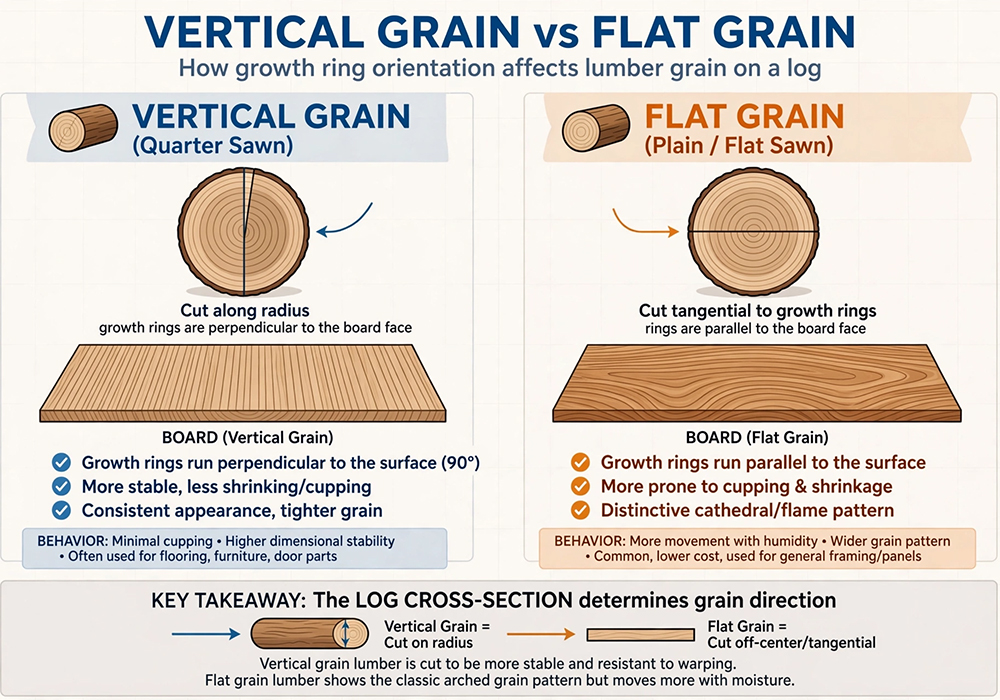
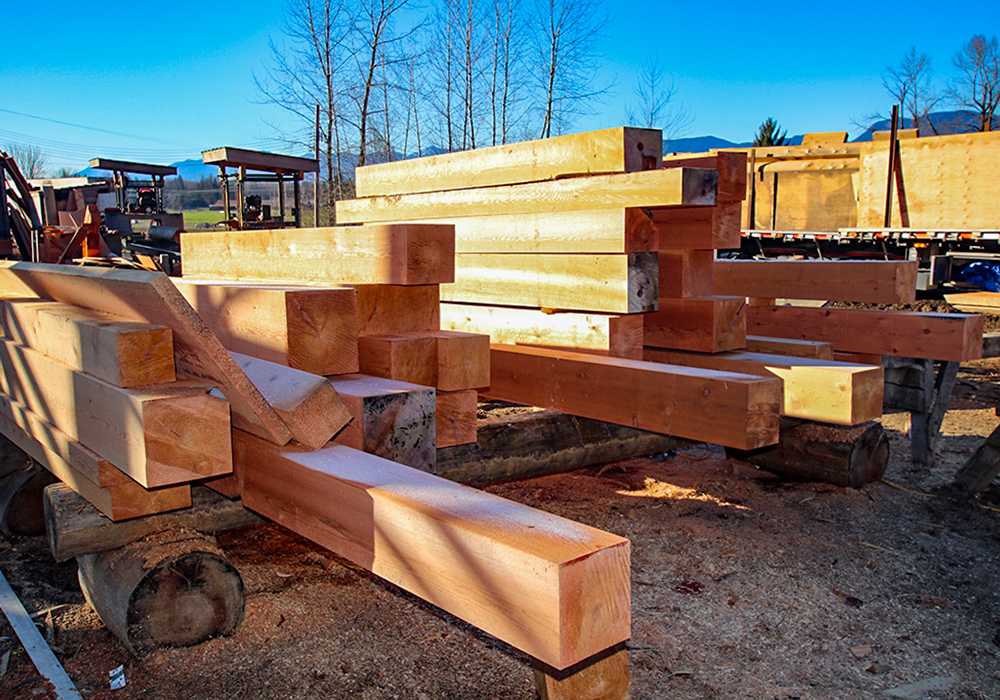
Timber or logs cut in vertical grain are sometimes called edge grain, rift cut, or quarter sawn. It forms when the annual growth rings stand vertically in the board. This cut requires large, high-quality logs because the mill needs enough clear wood to create boards with straight and tight grain.
Vertical grain lumber is known for its stability. The grain structure resists cupping, twisting, and movement as the wood ages. This makes it an excellent choice for applications where precision and long-term performance matter.
Knots in vertical grain lumber appear as long spike shaped marks across the face. These knots are flatter and more linear because of the way the board is cut. The overall look is clean and refined. Vertical grain is often used in high end projects where appearance and durability are equally important.
What Flat Grain Means
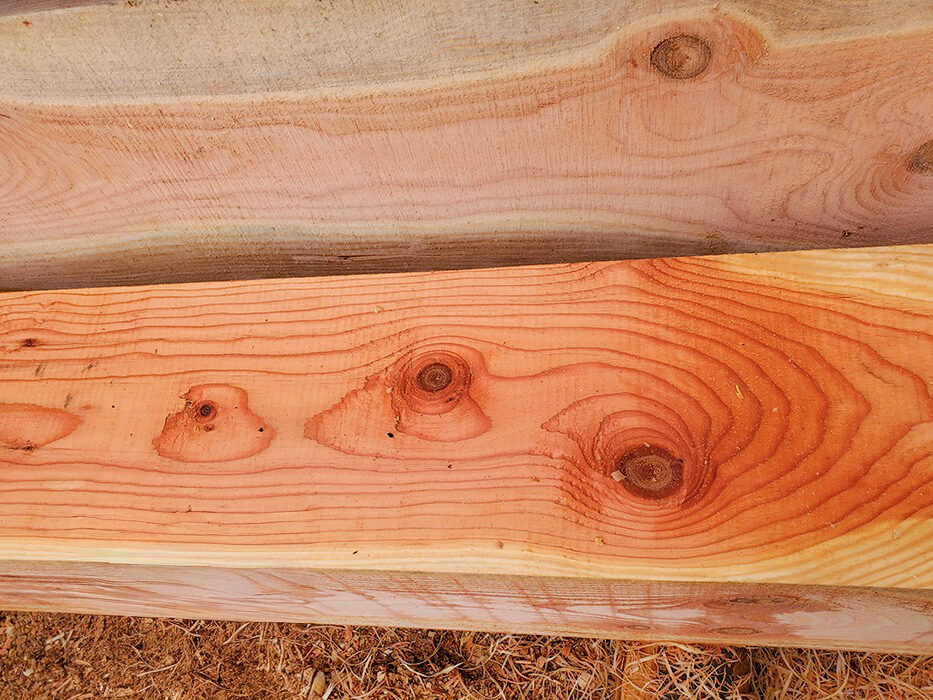
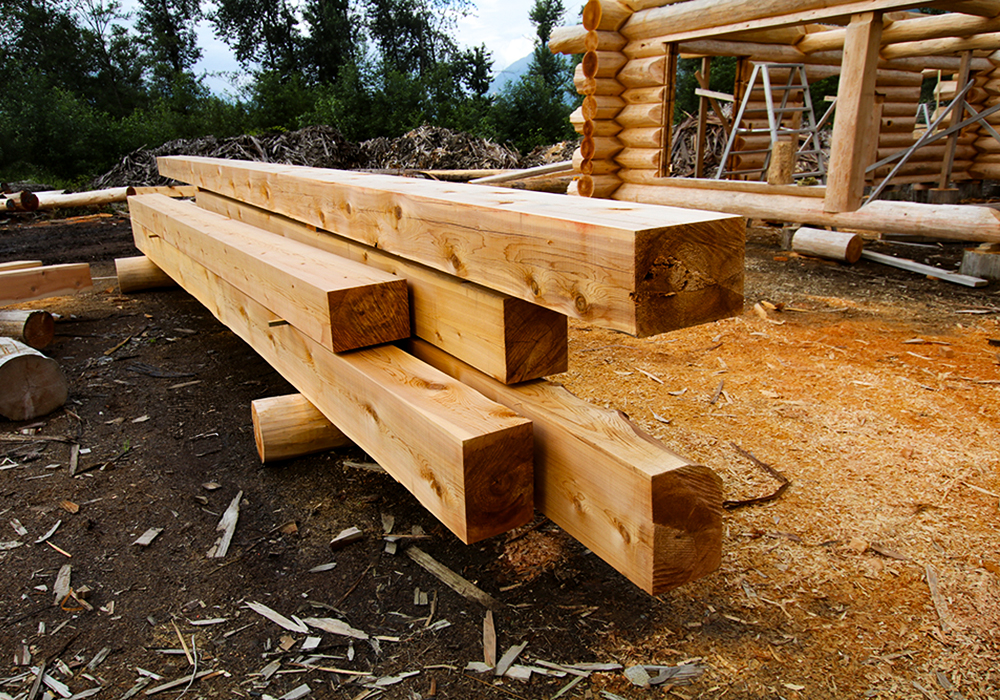
Flat grain lumber is milled differently. The annual growth rings run parallel to the face of the board. This creates the familiar wavy grain pattern that most people associate with cedar and fir. Flat grain boards can be milled from smaller logs which makes them more cost effective and widely available. Most construction lumber is flat grain.
Knots in flat grain lumber are round or oval because knots begin in the center of the tree and grow outward. This cut produces boards with more visible character and a natural organic pattern.
Flat grain lumber can show more movement over time. Slight cupping or warping is normal because wood responds to changes in moisture. In exterior applications, especially in coastal climates like ours, this movement is expected. Rain, humidity, and seasonal shifts all influence how wood behaves.
Even with this natural movement, flat grain remains a durable and practical choice for most projects. It offers strength, beauty, and a more approachable price point. Many homeowners prefer the character of flat grain because it highlights the natural story of the tree.
How Cascade Handcrafted Uses Both Grain Types
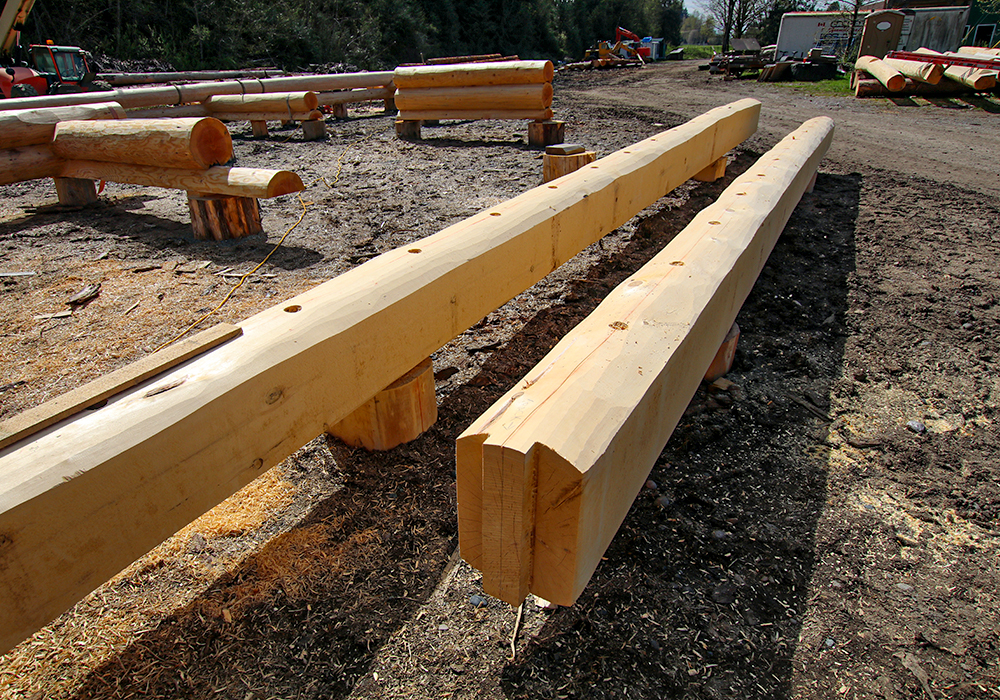
At Cascade Handcrafted we work with both vertical grain and flat grain Western Red Cedar. Each piece is selected intentionally based on how it will perform in a handcrafted log home.
When a timber is cut in a vertical grain, it provides exceptional stability and a refined appearance. Flat grain brings warmth, texture, and a more expressive pattern. Both are strong. Both are durable. Both have a place in the craft. And although the key is understanding how each grain behaves and choosing the right material for the right application, all cuts of Western Redcedar leave a beautiful grain that can’t be copied.
Why Grain Direction Matters
Timber Tuesday is all about celebrating the details that make handcrafted log homes unique. Grain direction is one of those details. It is simple, but it matters. When you understand how vertical grain and flat grain behave, you can make better choices that support the long-term performance of your home.
Drop by the Chilliwack site, request a free quote or call 1-604-703-3452 to speak directly to Markus and he will walk you through the options available to you, whether it is residential, commercial, renovations or custom floor plans, begin the journey towards your wood-based home today.